
Did you know automation & control systems can really improve your pneumatic conveying operation? These systems do more than just basic upgrades. Sensors help control the material flow and stop blockages. The system uses less energy by making air pressure and flow better. Your team is also safer because of things like automatic shutdowns and remote monitoring.
Automation & Control Systems help work get done faster. They cut down on how much people need to do by up to 90%. They also lower energy use by more than 40%. Real-time monitoring and predictive maintenance find problems early. This stops expensive breakdowns and keeps things running well. Sensors make the system work better. They give live data about pressure, flow, and temperature. This helps people make good choices. Automation makes the workplace safer. It means less heavy lifting and fewer accidents. Doing regular maintenance and having a good system design is very important. This helps the system last longer and work better. It also stops costly downtime.
Automation & Control Systems can make your pneumatic conveying operation better. These systems help you move materials faster and with less work. When you use automation, you see real changes:
You need people to feed materials much less, by up to 90%.
You make the system work better by more than 30%.
You use over 40% less energy than old dilute phase systems.
Automation & Control Systems let you change your setup to fit your space. For example, PNEUMATI-CON® systems can go short or long distances. You can run lines through small spaces in walls or ceilings. This makes them great for places where there is not much room.
You also get more control over how things move. The controls let you pick manual, timed, or weight-based operation. You can send conveyor lines in different directions, so you can change layouts fast. Automation makes material flow better and saves energy. Your process keeps going smoothly and safely, even if the area is dangerous.
Tip: If you want to move more material and make better products, automation helps you do both.
Automation & Control Systems help your operation stay safe and reliable. You can watch your system as it works, so you see problems before they stop you. Predictive maintenance tools help you fix things early, so you do not get surprised by breakdowns. Smart control algorithms save energy and make your system work better.
| Feature | Benefit |
|---|---|
| Real-time monitoring | Finds problems before they stop production |
| Predictive maintenance | Stops surprise breakdowns |
| Intelligent control algorithms | Saves energy and makes things work better |
You keep workers safe by needing less lifting and moving. Employees do not have to carry heavy things, so they are less likely to get hurt. A safer workplace keeps your staff safe and saves you money. Overexertion, falls, and being hit by objects are common accidents at work. Automation helps you avoid these problems.
Better worker safety means fewer people get hurt.
Better product quality means you can make more.
You make your workplace safer and more productive.
Automation & Control Systems help you feel calm. You know your operation works well, your workers are safe, and your costs stay low.
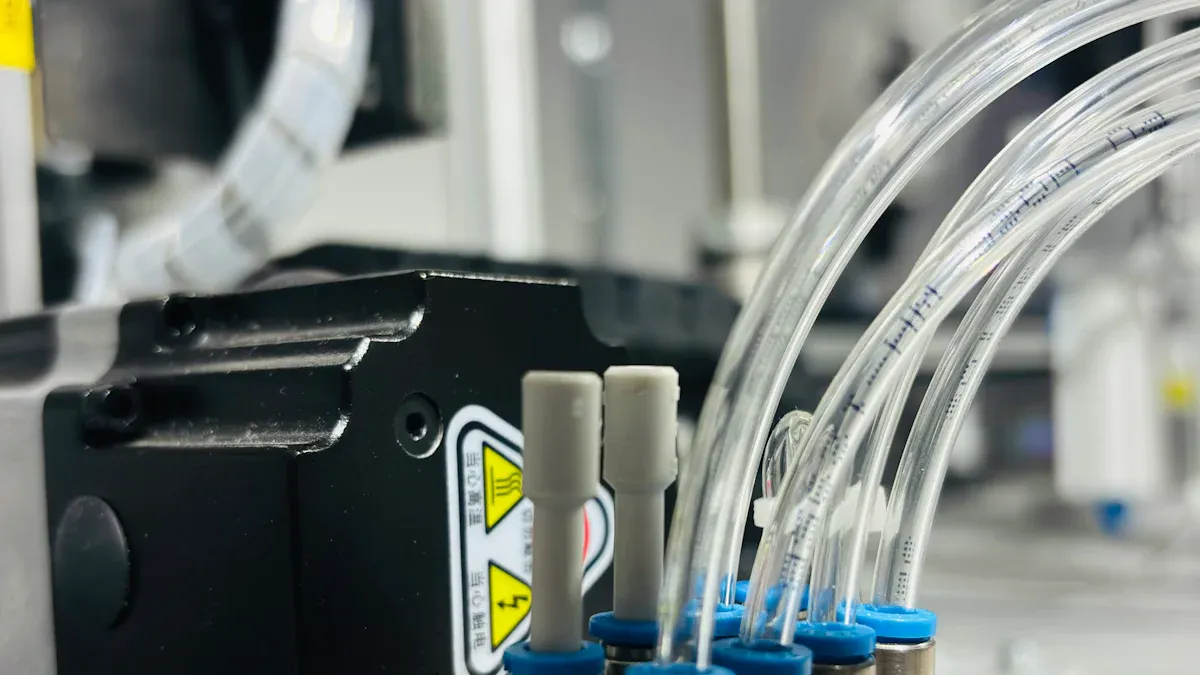
Image Source: unsplash
Pneumatic conveying systems use air or gas to move dry materials. These systems help move powders, granules, and small particles fast and safely. Many industries use them because they keep things clean and cut down on dust. Here are some main ideas you should know:
Airflow and pressure push materials through pipes.
The system has air movers, feed systems, pipelines, separators, and controls.
You can send materials far or near, even around corners.
These systems lower the chance of dust and contamination.
You do not need to spend much time fixing them.
You can find pneumatic conveying systems in lots of places. Here are some ways people use them:
Chemical plants: Handle powders and plastic resins.
Pharmaceutical factories: Move fine powders between steps.
Plastics: Move resin pellets and regrind.
Building materials: Move cement powder and gypsum.
Mining: Move mineral powders.
Waste treatment: Move sludge and processed waste.
New energy: Handle battery materials and advanced powders.
Note: These systems fit into small spaces and tricky layouts, so they work well in many plants.
You might have some problems when you use pneumatic conveying systems. The table below shows the most common problems and what they mean for your work:
| Challenge | Description |
|---|---|
| Pipeline Blockage | Over 40% of failures come from clogged pipes. Moisture, slow air, or sticky stuff cause this. |
| Unstable Conveying Capacity | Flow changes can stop your process. Bad feeding or air pressure often cause this. |
| Pressure Abnormalities | High or low pressure makes things work badly. Blockages or leaks are common reasons. |
| Equipment Wear and Damage | Fast air and rough materials wear out pipes and feeders. |
| Dust Leakage and Material Loss | Dust escapes, wasting material and causing health risks. |
You can fix many of these problems with Automation & Control Systems. These systems help you find blockages early, change air pressure, and keep things running well.
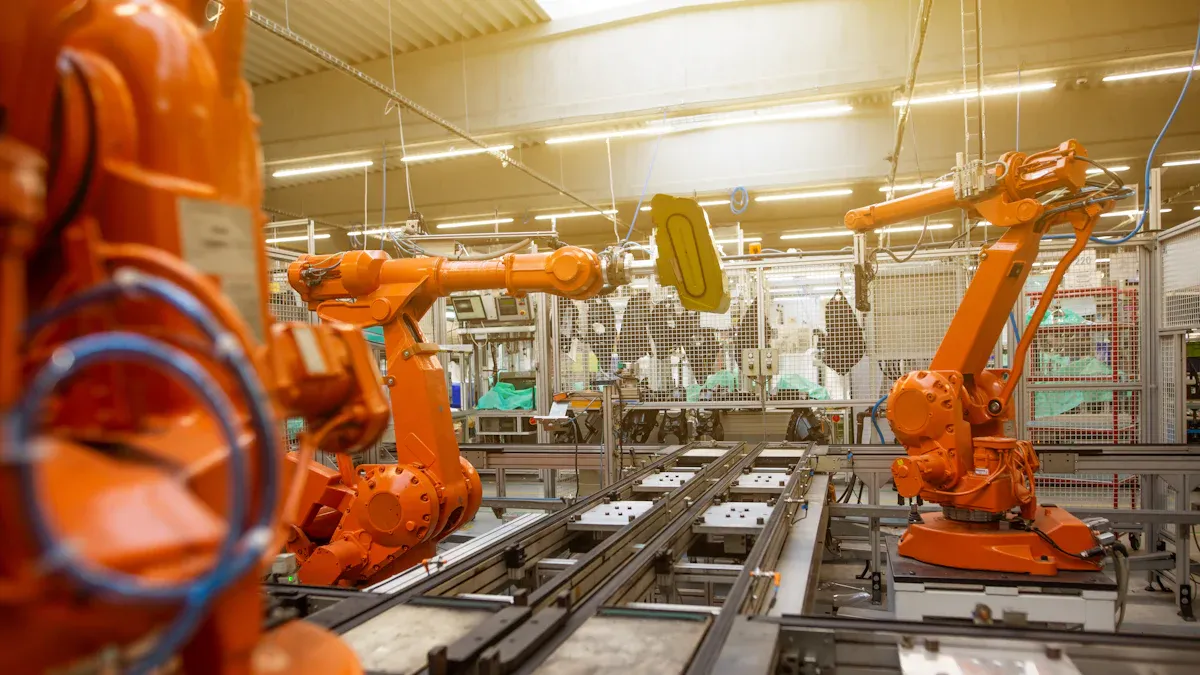
Image Source: unsplash
Sensors make your pneumatic conveying system smarter. They help you know what is happening inside pipes and machines. Sensors give you live data, so you can act fast if there is a problem. You use different sensors for different jobs. The table below shows the main types:
| Sensor Type | Function Description |
|---|---|
| Pressure | Watches air pressure to keep materials moving right |
| Temperature | Stops overheating and controls heat problems |
| Material Flow | Checks that materials move at the right speed and amount |
Sensors help your system work well. You can find problems early and fix them before they get worse. Sensors also help you save energy and stop long delays. Real-time monitoring makes your process better in these ways:
| Evidence Type | Description |
|---|---|
| Continuous Monitoring | Sensors always check dust, air pressure, and filter health. You can change things right away. |
| Efficiency Improvement | Live data helps you set cleaning times and settings. You spend less time fixing things. |
| Predictive Maintenance | Finding problems early lets you plan repairs before things break. |
Tip: If you want your system to last longer and work better, use sensors for real-time monitoring.
PLCs are like the brains of your pneumatic conveying system. They control how your system works. PLCs collect live data from sensors like pressure sensors and flow meters. They use special rules to change valves and converters. This keeps air flow and pressure just right.
PLCs tell actuators what to do using sensor data.
They make quick choices to stop blockages.
PLCs react fast when your system changes.
Without PLCs, your system would not work as well.
New PLCs have cool features that make Automation & Control Systems even better. The table below shows some new things they can do:
| Advancement Type | Description |
|---|---|
| Improved Communication Protocols | New ways like Ethernet I/P and Profinet help you share data for recipes and tracking. |
| Enhanced HMIs | Touchscreen HMIs show clear pictures and let you interact easily. |
| Software Simulations | PLCs let you test software changes safely before using them. |
| Advanced Control Algorithms | Built-in rules make it easier to control your system. |
| Integrated Sensors | New systems use sensors for pressure, flow, and level control. |
| Real-time Data Access | You can check and review how your system works from anywhere. |
You can watch pressure, airflow, and material flow rates. Automation & Control Systems help you spot problems before they cause trouble. You get steady results and fewer surprises.
Human-machine interfaces, or HMIs, help you use your system easily. You can see what is happening right now. HMIs show pictures of your conveyor system. If something goes wrong, the screen shows where the problem is. You can fix things faster and keep your system running.
The new Realtime360 View™ HMI and diagnostic software lets you watch your material handling system easily. Errors and faults show up with device details, so operators know what is wrong.
Graphical screens show your system in a simple way.
Faults highlight problem spots for quick fixes.
Control software makes your system even smarter. You can use ERP-controlled precision to keep mistakes low, sometimes as low as 0.5%. Dual pneumatic blending mixes materials better by 83%. This means your products get better.
You can watch your system live and plan repairs before things break. Automation & Control Systems help you cut downtime and work more efficiently. You get better results and save money.
Note: Automation & Control Systems work together. Sensors, PLCs, and HMIs make a feedback loop. You get live control and pressure checks. You can make your system better and keep it running well.
You can make your pneumatic conveying system better with Automation & Control Systems if you follow some steps. First, check what kind of material you want to move. Look at how the material acts and what it is made of. This helps you know if your system can handle it. Next, look at your building and what your team needs. Pick a system that fits in your space and helps you reach your goals. Think about how much material you need to move and how fast it should go. Choose a system that works for what you do now and what you might do later.
Check if the material works with your system.
Look at your building and what you need.
Pick a system that moves enough material at the right speed.
You need to plan each part of the project well. The table below shows how long each step takes and what you need:
| Phase | Duration (%) | Description |
|---|---|---|
| Planning | 20-30% | Study your process, pick vendors, design the system, and get money approved. |
| Equipment Procurement | 40-50% | Buy and build the equipment, especially if you need special parts. |
| Installation & Debugging | 20-30% | Put in the system, fix problems, and make it work better. |
Tip: If you plan well, you will not have delays and your project will finish on time.
You might have some problems when you add automation. Pipes can get blocked if air slows down or particles stop moving. Materials can break if they move too fast. Rough materials can wear out pipes and cause leaks. If feeders are not made well, material flow can change a lot. Bad system design can let products get dirty, which is a big problem in places with strict rules.
Materials can break if they move too fast.
Rough materials can wear out pipes.
Bad feeders can make flow change a lot.
Bad design can let products get dirty.
You can fix these problems by making air move faster, using gentle ways to move fragile materials, and picking pipes that do not wear out fast. Make feeders that keep material moving steady and clean the system well to stop dirt from getting in.
You need to take care of your system to keep it working well. Check your system often to find problems early. Doing regular maintenance stops your system from breaking down and helps it last longer. Clean your system often to stop dust and dirt from building up. Make sure you put the system in the right way to stop problems. Teach your team how to spot signs of trouble.
Check your system often to find problems.
Make a plan to do regular maintenance and stop breakdowns.
Clean your equipment often so it lasts longer.
Put the system in right to avoid problems.
Teach your team to see when parts are wearing out.
Update your software on a schedule to keep things running well. Predictive maintenance helps you stop problems before they happen. Studies show that when equipment breaks, factories lose a lot of money. You can lose up to 20% of what you make if machines stop working. Automation & Control Systems help you keep your system running and avoid these losses.
Note: Good maintenance and smart tools protect your system and help you get more work done.
You get lots of good things when you use Automation & Control Systems. These systems help your work go faster. They also lower how much you pay for workers. Your workplace becomes safer for everyone. You can see how much you save by checking your setup. Set goals and compare what you spend to what you save.
| Misconception | Truth |
|---|---|
| Automation always breaks materials | Dense-phase systems protect fragile products |
Look at your system and find ways to make it better.
Ask automation experts to help you pick the best choice.
Use training tools to learn more about pneumatic conveying.
The right upgrades can make your operation safer, cleaner, and cheaper.
You move materials faster and make fewer mistakes. Automation helps you find problems early. You can fix issues before your process stops. Safety gets better for everyone.
Sensors show you live data. You can check pressure, flow, and temperature. This keeps your system working well. You avoid expensive breakdowns.
Yes! Automation controls air flow and pressure. You use only the energy needed. Many people save up to 40% on energy.
Upgrading is not very hard. Many automation tools fit old systems. You can start with a few features. Add more as you need them.


